


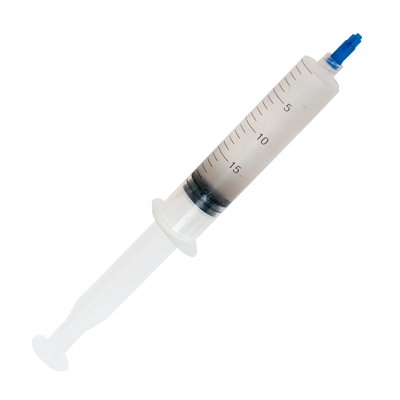
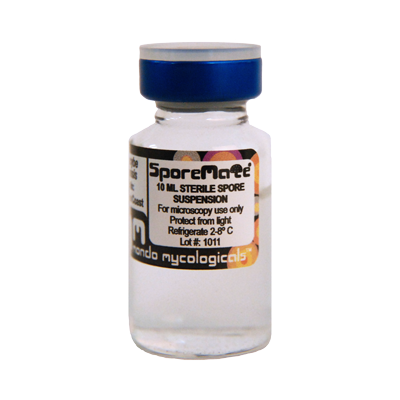
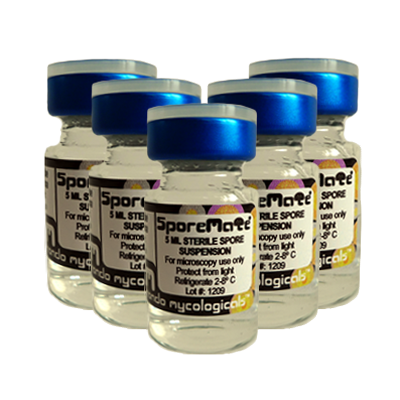
Pensacola psilocybe cubensis spore vial
23.53$
Pensacola Psilocybe: Purpose, Characteristics, and Mycology Research
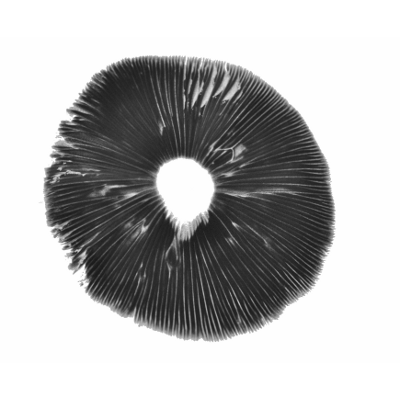
A Pensacola Psilocybe is a commonly used tool in mycology for studying fungal spores and identifying mushroom species. It is created by allowing a mature mushroom cap to release its spores onto a clean surface, forming a visible pattern that can be analyzed.
Spore prints are important in both educational and research settings because they provide insight into fungal classification and reproduction. By examining the color, pattern, and density of spores, researchers can better understand different mushroom varieties and their characteristics.
The Pensacola variety is associated with the Psilocybe cubensis species, making it part of a broader group of fungi studied for their ecological role and biological structure.
What Is Pensacola Psilocybe?
A Pensacola Psilocybe is formed when spores fall from the gills of a mushroom cap onto a flat surface such as paper, foil, or glass. This creates a visible imprint that reflects how the spores are naturally released.
Spore prints are used to:
-
identify mushroom species
-
study spore color and structure
-
analyze fungal characteristics
-
support microscopy research
Because spores are microscopic, the print represents millions of spores collected in one place, making them easier to observe and study.
How Spore Prints Are Created
Spore prints are formed through a simple natural process. A mature mushroom cap is placed on a clean surface and left undisturbed for several hours. During this time, spores fall from the gills and create a pattern below.
This process allows researchers to examine:
-
spore color
-
distribution patterns
-
spore density
These features are important for identifying fungal species and comparing different varieties.
Importance in Mycology Research
Spore prints are one of the most basic yet valuable tools in mycology. They provide essential information that helps researchers classify fungi and understand their biology.
In research, spore prints are used to:
-
distinguish between species
-
study reproduction methods
-
analyze genetic variation
-
compare different mushroom strains
They are often one of the first steps in identifying unknown mushrooms in both field and laboratory studies.
Characteristics of Pensacola Spore Prints
Spore prints from cubensis varieties typically share similar visual traits. These characteristics help researchers identify the species and confirm classification.
Common features include:
-
dark purple-brown coloration
-
fine, powder-like texture
-
consistent and evenly spread patterns
Environmental factors such as humidity and mushroom maturity can influence the final appearance of the print.
These variations make spore prints an interesting subject for detailed observation in mycology.
The Role of Spores in Fungal Life Cycles
Spores play a crucial role in the life cycle of fungi. They are responsible for reproduction and allow mushrooms to spread across different environments.
When spores land in suitable conditions, they may germinate and form mycelium, which is the network of microscopic threads that makes up the main body of the fungus.
Mycelium grows through organic material, absorbing nutrients and eventually producing mushrooms under the right conditions.
Understanding this process helps researchers study fungal development and ecosystem interactions.
Mycology and Spore Analysis
Mycology focuses on studying fungi and their biological processes. Spore analysis is a key part of this field because it provides insight into classification and reproduction.
By studying spore prints, researchers can:
-
identify fungal species
-
understand growth patterns
-
explore biodiversity
-
classify fungi accurately
Microscopy is often used alongside spore prints to provide a more detailed view of spore structure.
Why Spore Prints Are Important in Research
Spore prints are simple but powerful tools. They do not require complex equipment, yet they provide valuable information for scientific study.
Researchers and students use them to:
-
observe fungal reproduction
-
compare mushroom varieties
-
learn identification techniques
-
support laboratory studies
Their accessibility makes them widely used in both professional and educational environments.
Conclusion
Understanding fungal biology starts with studying spores. A Pensacola Psilocybe provides a practical and effective way to observe and analyze these microscopic reproductive cells.
By examining spore prints, researchers gain insight into fungal classification, reproduction, and biodiversity. This makes them an essential tool in mycology and an important step in exploring the fascinating world of fungi.
Reviews
There are no reviews yet.