
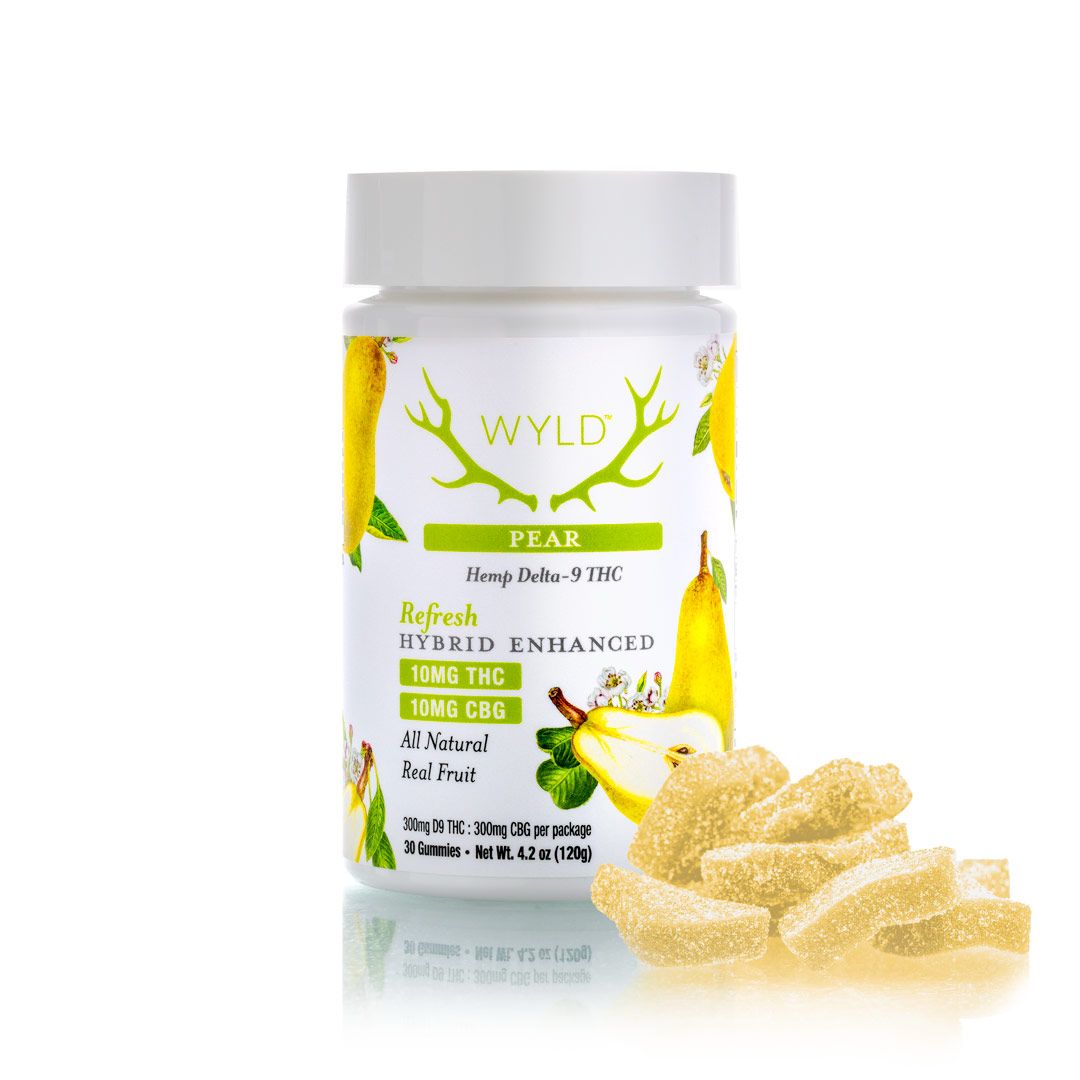
Wyld – Pear 1:1 THC:CBG | Refresh D9
59.99€
A premium hybrid Wyld Pear 1:1 offering fresh fruit flavor and natural refresh. Ideal for recovery and balance. Available with discreet European shipping.
What Is CBG? A Complete Educational Guide
The cannabinoid industry continues to grow across Europe. One compound attracting strong scientific interest is CBG. Researchers often call it the “mother cannabinoid” because other cannabinoids develop from its acidic form during plant growth.
Understanding this compound helps consumers, researchers, and industry professionals stay informed about new developments in cannabinoid science.
The Science Behind CBG
In the cannabis plant, cannabinoids start in acidic forms. CBGA (cannabigerolic acid) is the precursor molecule. As the plant matures, enzymes convert CBGA into THCA, CBDA, and CBCA. When heat is applied, these compounds transform into THC, CBD, and CBC.
Because most CBGA converts into other cannabinoids, only small amounts of CBG remain in mature plants. This makes it less abundant and sometimes more expensive to extract.
Scientists extract it from specially bred hemp strains that contain higher concentrations. Modern cultivation techniques help increase yield and improve research consistency.
How CBG Works in the Body
The human body has an endocannabinoid system (ECS). This system helps regulate mood, sleep, appetite, and immune response. Cannabinoids interact with receptors known as CB1 and CB2.
Research suggests that CBG binds directly to both CB1 and CB2 receptors. This interaction may influence neurological and physical responses differently compared to CBD, which interacts more indirectly.
Because of its binding ability, researchers study it for potential therapeutic applications. However, large-scale human trials remain limited, and more studies are needed.
Potential Benefits Under Research
Scientific interest in CBG continues to grow. Early laboratory and animal studies explore areas such as:
-
Inflammation response
-
Neuroprotective properties
-
Appetite stimulation
-
Antibacterial activity
It is important to understand that most findings are preliminary. While results appear promising, researchers continue testing safety, dosage, and long-term effects.
Consumers should always rely on verified data and avoid exaggerated claims. Responsible education supports informed decision-making.
Differences Between CBG, CBD, and THC
Many people compare cannabinoids to understand their unique properties.
-
THC is psychoactive and produces intoxication.
-
CBD is non-intoxicating and widely used in wellness products.
-
CBG is generally considered non-intoxicating and may provide different receptor interactions.
Unlike THC, it does not typically produce strong psychoactive effects. This makes it attractive for individuals seeking cannabinoid research without intoxication concerns.
Because it occurs in small quantities, manufacturers often use advanced extraction processes to isolate it.
Legal Status in Europe
In many European countries, hemp-derived cannabinoids are legal if they contain less than the permitted THC threshold. However, regulations vary by country.
The legal status of CBG usually follows hemp legislation, but each nation may apply specific rules regarding extraction methods and product types.
Before purchasing or distributing cannabinoid products, individuals should verify local laws. Regulatory frameworks continue to evolve as governments review safety and market impact.
Safety and Quality Considerations
As with all cannabinoids, quality matters. Consumers should look for:
-
Third-party laboratory testing
-
Clear labeling of cannabinoid content
-
Transparent sourcing information
-
Proper manufacturing standards
Because the market is still developing, not all products meet high-quality standards. Choosing verified suppliers reduces risk and ensures better consistency.
Experts recommend starting with low amounts when trying new cannabinoid products. Individual response varies depending on metabolism, body chemistry, and prior experience.
Market Trends and Industry Growth
The European cannabinoid market continues to expand. Companies invest in research, product innovation, and new hemp genetics. As awareness increases, demand for minor cannabinoids also grows.
CBG is becoming more visible in oils, capsules, and cosmetic formulations. Search trends show rising curiosity as consumers look for alternatives to traditional cannabinoids.
Education remains the key driver of long-term growth. Accurate information builds trust and supports responsible industry development.
Final Thoughts
The cannabinoid landscape continues to evolve. CBG stands out because of its role as a precursor molecule and its unique receptor interaction profile.
While research remains ongoing, interest continues to grow across Europe. Understanding how it works, how it differs from other cannabinoids, and how legal frameworks apply helps individuals make informed decisions.
Always prioritize safety, transparency, and verified information when exploring cannabinoid products.

Reviews
There are no reviews yet.