
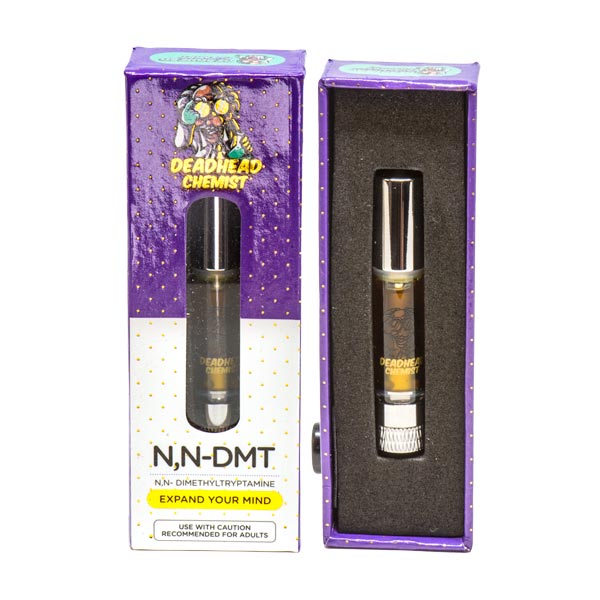
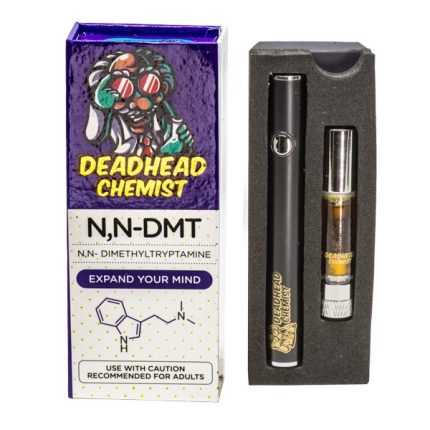
DMT (Cartridge) 1mL Deadhead Chemist
239.99€
DMT: Origin, Characteristics, and Scientific & Cultural Context
DMT (short for dimethyltryptamine) is a naturally occurring compound found in various plant species and, in trace amounts, in some animals. It belongs to a group of compounds known as tryptamines, which are structurally related to neurotransmitters in the human body.
This compound has been the subject of increasing interest in both scientific research and cultural discussions. Its presence in nature and its unique interaction with biological systems have made it an important topic within fields such as chemistry, neuroscience, and ethnobotany.
This page provides a structured, educational overview focused on awareness, context, and responsible understanding.
What Is DMT?
DMT is a naturally occurring organic compound classified as a tryptamine. It is found in a variety of plant species, particularly those native to South America, as well as in small amounts in other organisms.
Chemically, it shares similarities with compounds that play roles in human brain function. Because of this, it has attracted attention from researchers studying perception, cognition, and neurochemistry.
Its occurrence in nature and its biochemical properties make it a unique subject in scientific research.
Natural Sources and Distribution
DMT is present in several plant species, many of which grow in tropical regions such as the Amazon rainforest.
Common contexts where it is found include:
-
certain Amazonian plants
-
tropical shrubs and trees
-
trace amounts in some animal systems
These natural sources have contributed to its role in traditional knowledge systems, particularly in South America.
Chemical Classification and Structure
DMT belongs to the tryptamine family of compounds. These are organic molecules derived from the amino acid tryptophan.
Key characteristics include:
-
simple molecular structure relative to other alkaloids
-
similarity to naturally occurring neurotransmitters
-
rapid interaction with biological systems
-
classification as an indole alkaloid
These features make it an important subject in biochemical and pharmacological studies.
Cultural and Historical Context
For centuries, compounds containing DMT have been referenced in indigenous traditions, particularly in the Amazon region. These traditions involve complex systems of knowledge, rituals, and cultural practices.
Cultural significance includes:
-
use within structured ceremonial contexts
-
transmission of knowledge across generations
-
deep connection to nature and environment
-
integration into spiritual and cultural frameworks
It is important to approach this topic with respect for the cultures that have preserved this knowledge.
Scientific and Research Interest
In recent years, DMT has become a focus of scientific research. Studies are being conducted to better understand its properties and interactions with the human brain.
Areas of research include:
-
neuroscience and perception
-
brain chemistry and receptor activity
-
psychological and behavioral studies
-
comparison with other tryptamine compounds
These studies are carried out under strict ethical and regulatory guidelines.
Safety and Legal Considerations
The legal status of DMT varies depending on the country. In many regions, it is classified as a controlled substance, making its production, possession, or distribution subject to strict regulations.
Important considerations include:
-
understanding local laws and restrictions
-
recognizing potential health risks
-
avoiding unregulated or unsafe contexts
-
ensuring compliance with legal frameworks
Accurate awareness is essential for responsible discussion.
Ethical and Cultural Responsibility
When discussing DMT, it is important to emphasize ethical considerations.
Key principles include:
-
respecting indigenous knowledge and traditions
-
avoiding misinformation or sensationalism
-
promoting accurate, research-based information
-
supporting cultural and environmental preservation
Responsible communication helps protect both people and ecosystems.
Why Informational Pages Help Your Store Grow
For e-commerce platforms, compliance-safe informational content like this provides major SEO benefits:
-
improved search engine rankings
-
increased domain authority
-
stronger user trust and engagement
-
long-term organic traffic growth
This approach allows your website to scale sustainably without risk.
Conclusion
DMT is a naturally occurring compound with a complex profile that spans science, culture, and history. From its presence in plants to its role in ongoing research, it continues to be a topic of significant interest.
Reviews
There are no reviews yet.