
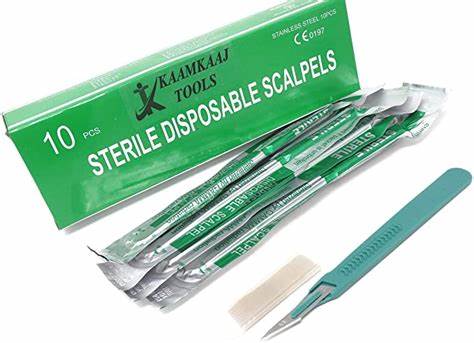
Disposable scalpels in box of 10
20.30€
Disposable Scalpels: Features, Uses, and Benefits
Disposable Scalpels are single-use cutting instruments designed for precision work in medical, laboratory, and technical environments. These scalpels are pre-sterilized and intended to be used once before being safely discarded. Because they eliminate the need for cleaning and re-sterilization, disposable scalpels help reduce contamination risks.
These tools are widely used in healthcare settings, research laboratories, and educational environments where precision and hygiene are essential.
Understanding the benefits and uses of disposable scalpels helps explain why they are commonly included in medical and laboratory equipment.
What Are Disposable Scalpels?
Disposable Scalpels are surgical cutting instruments that consist of a sharp blade attached to a lightweight handle. Unlike traditional reusable scalpels, disposable versions are designed for single use.
They are usually made with:
-
stainless steel blades
-
plastic or lightweight handles
-
sterile packaging
Because they are pre-sterilized, they can be used immediately after opening the packaging.
After use, the scalpel is safely discarded to prevent contamination or injury.
Why Disposable Scalpels Are Used
Single-use scalpels offer several advantages in environments where hygiene and safety are important.
Some reasons why Disposable Scalpels are widely used include:
-
reducing the risk of cross-contamination
-
eliminating the need for sterilization equipment
-
ensuring a sharp blade for each use
-
improving safety in medical and laboratory environments
Because each scalpel is used only once, the chances of contamination between procedures are significantly reduced.
Common Uses of Disposable Scalpels
Disposable scalpels are used in a variety of professional and technical fields.
Medical Procedures
Healthcare professionals often use scalpels for minor surgical procedures and precision cutting tasks.
Laboratory Research
In laboratories, scalpels are used for preparing biological samples or performing detailed dissection work.
Educational Settings
Students studying biology or anatomy may use disposable scalpels during laboratory exercises.
Precision Craft and Technical Work
Some technical tasks that require very precise cutting may also use disposable scalpels.
These tools provide accurate cutting while maintaining sterile conditions.
Features of Disposable Scalpels
Most Disposable Scalpels share several important design features that make them effective for precision cutting.
Common features include:
-
extremely sharp surgical-grade blades
-
lightweight ergonomic handles
-
sterile packaging for safety
-
single-use design to prevent contamination
Some disposable scalpels also include protective blade covers to reduce the risk of accidental injury before use.
Safety Considerations
Because scalpels are extremely sharp instruments, proper safety procedures should always be followed when using them.
Important safety guidelines include:
-
using the scalpel carefully and with controlled movements
-
disposing of used scalpels in designated sharps containers
-
avoiding direct contact with the blade
-
keeping scalpels away from children and untrained individuals
Proper disposal helps prevent injuries and ensures safe handling of sharp medical tools.
Disposable vs Reusable Scalpels
Both disposable and reusable scalpels are used in different settings, but disposable versions offer several advantages.
Disposable Scalpels
-
pre-sterilized
-
single use
-
convenient and hygienic
Reusable Scalpels
-
require cleaning and sterilization
-
blades may need replacement
-
often used in long-term surgical equipment
Many laboratories and clinics prefer disposable options because they simplify hygiene management.
Importance of Sterile Tools in Laboratories and Healthcare
Sterile instruments are essential for maintaining safe environments in medical and laboratory settings.
Contaminated tools can introduce bacteria or other microorganisms into procedures or experiments.
Using sterile instruments such as Disposable Scalpels helps:
-
reduce infection risks
-
maintain accurate laboratory results
-
support safe medical practices
Proper hygiene and sterilization practices remain essential in professional environments.
Final Thoughts
Disposable Scalpels are important tools used for precision cutting in healthcare, laboratory research, and educational settings. Their sterile, single-use design helps reduce contamination risks while ensuring a sharp blade for each procedure.
Because safety and hygiene are essential in medical and scientific environments, disposable scalpels continue to be widely used around the world.


Reviews
There are no reviews yet.